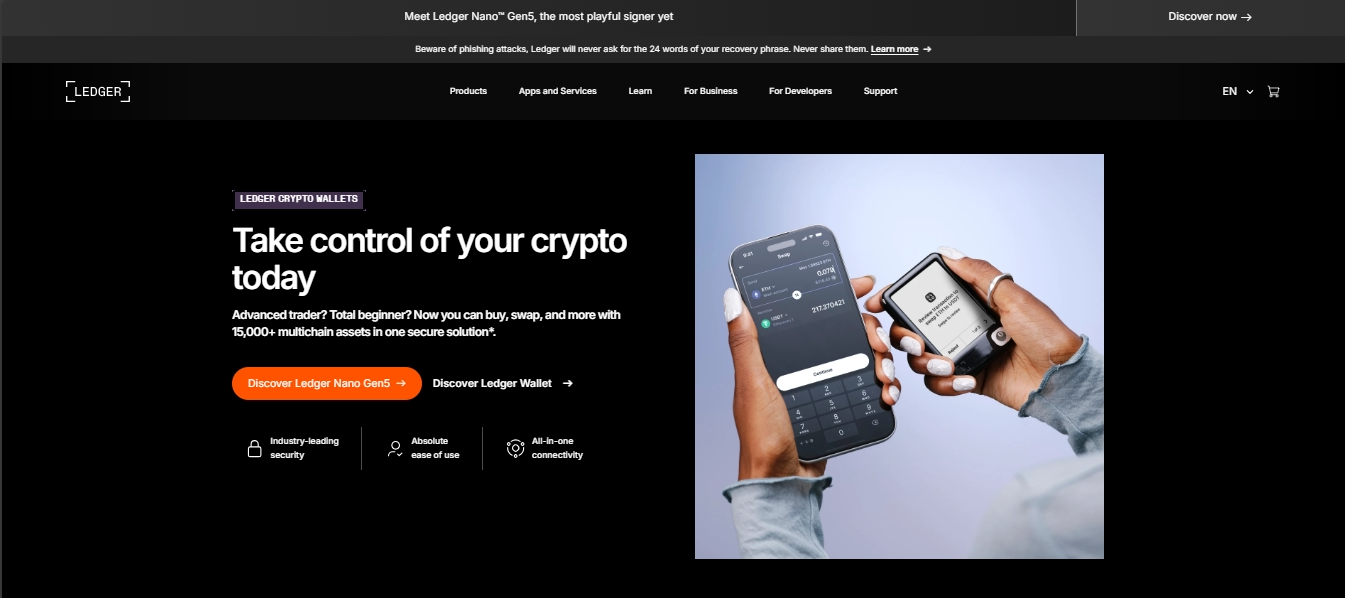
Digital assets give you freedom, but only if they are properly secured. Ledger helps you take full control of your cryptocurrency by storing your private keys offline in a secure hardware wallet. If you’re visiting Ledger Start, it means you’re ready to set up your device the right way and begin managing your crypto safely.
This page will guide you through the essential steps to initialize your Ledger wallet, explain how it works, and share best practices to keep your assets protected long term. Whether you’re holding Bitcoin, Ethereum, NFTs, or exploring Web3, Ledger gives you ownership without compromise.
Ledger is a hardware wallet designed to keep your private keys offline and away from online threats. Unlike exchanges or software wallets, Ledger never exposes your keys to the internet. Every transaction must be manually approved on the device, ensuring maximum protection against hacking, malware, and phishing attacks.
At the core of every Ledger device is a Secure Element chip—the same type of technology used in passports and banking cards. This chip isolates sensitive data and ensures your crypto remains safe even if your computer or phone is compromised.
With Ledger, you don’t rely on third parties. You control your funds, your access, and your future.
Setting up your Ledger wallet correctly is critical. Ledger Start ensures:
Skipping steps or using unofficial tools can put your assets at risk. That’s why Ledger Start exists—to give users a trusted starting point.
Before starting, prepare the following:
⚠️ Important reminder: Ledger will never ask for your recovery phrase. Anyone who does is attempting to scam you.
Ledger Live is the official application used to manage your wallet. It allows you to:
Always download Ledger Live from Ledger’s official website to avoid fake software.
Once Ledger Live is installed:
Your PIN protects your device if it’s lost or stolen. Choose a number that’s hard to guess and never share it with anyone.
Your Ledger will display a 24-word recovery phrase, one word at a time. This phrase is the master key to your wallet.
You must:
If your device is damaged or lost, the recovery phrase is the only way to restore your funds. If someone else gets it, they gain full access to your crypto.
Using Ledger means practicing self-custody—where you are fully responsible for your digital assets. This eliminates risks associated with centralized exchanges, such as:
With Ledger, your assets remain accessible as long as you control your recovery phrase.
After setup, Ledger Live becomes your control center. You can:
Every transaction must be physically approved on your Ledger device, protecting you from unauthorized transfers.
Ledger supports over 5,000 cryptocurrencies and tokens, including:
Ledger also supports NFT storage and management on networks like Ethereum and Polygon, making it ideal for long-term digital asset storage.
To stay safe:
Ledger’s security is strongest when combined with smart user habits.
Ledger stands apart due to:
Millions of users rely on Ledger to protect billions in digital assets, making it one of the most respected names in crypto security.
By completing your setup through Ledger Start, you are choosing security, independence, and long-term peace of mind. Ledger empowers you to explore crypto, NFTs, and Web3 while keeping your assets protected at all times.
Take control of your digital future today. With Ledger, your crypto stays yours—secure, private, and under your control.